
At home
Make room for the dryer—not just for the boots
How to plan an entryway drying spot around the manual: surface, airflow, water, cords and a clear place for removable parts.
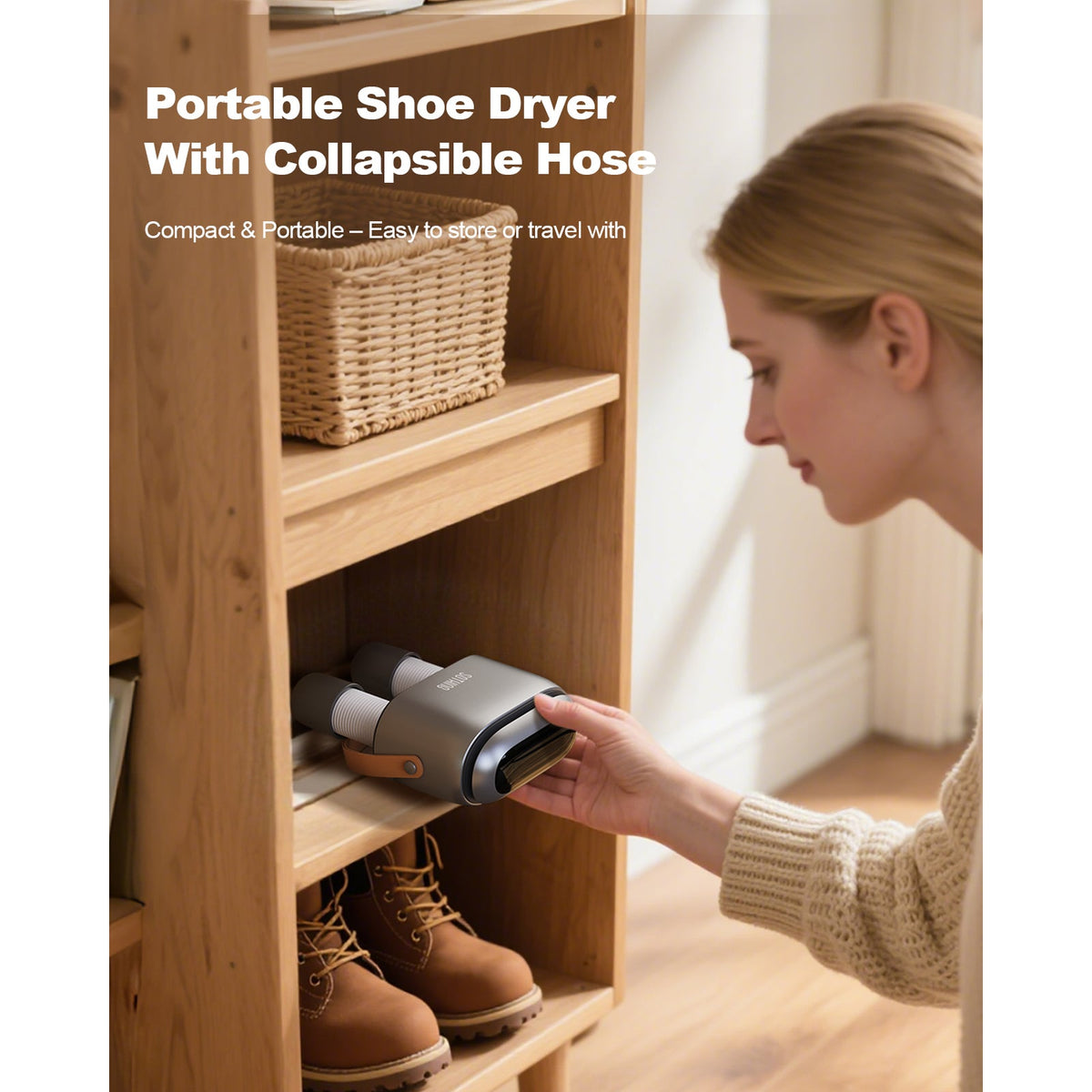
The empty space under a bench looks like a good home for a shoe dryer. Before putting it there, check whether it is a good place to run one.
Storage space and operating space are different. A compact appliance can still need clear air openings, an appropriate surface and room around it while in use. The manual—not the size of the gap—sets those requirements.
Look at the whole spot
Check the surface and the clearances required by the exact model. Look at where water from wet footwear could collect. Keep the appliance away from conditions its instructions do not permit, rather than relying on a tray or towel as an improvised safety solution.
Think about the room when it is busy. Can someone walk past without catching a cord or knocking the setup? Will a bag, coat or loose item end up over an air opening? If the answer depends on everyone remembering an awkward arrangement, choose a better location.
Leave the openings unobstructed
Position ducts or supports exactly as the product instructions describe. Do not force a tip into a tight opening, bend a part beyond its intended travel or cover an inlet to make the appliance fit. A physical fit is not the same as correct placement.
The footwear needs preparation too. Open it as permitted and deal with free water before using electrical equipment. Keep any removable parts somewhere they can dry under their own care instructions and be found again later.

Keep the controls and instructions within reach
You should be able to check the setup and follow the manual's supervision requirements. A timer does not turn an unsuitable location into a suitable one or automatically authorise unattended use.
Keep the model manual available. If a feature has separate environmental or occupancy requirements, read those before enabling it. Do not combine every available mode simply because the buttons are together.
Return it to storage deliberately
When the session is complete, follow the shutdown procedure, unplug and let the appliance cool before putting it away. Do not compress ducts or wind a cord in a way the manual does not allow. A storage photograph shows the design, not permission to pack a warm unit immediately.
Use a small, visible place for care notes and removable parts. That keeps the next session from beginning with a missing footbed or an assumption about which setting was used last time.
If your available space cannot meet the operating instructions, reconsider the location or the drying method before buying. The model comparison can help with design differences; the manual is the place for the operating requirements.
Continue reading

Wet shoes after the commute: what to do when you get home
A practical sequence for a rain-soaked pair: open it, remove free water, check the care instructions and decide how to dry it.

A timer ends a session. It does not tell you the shoe is dry.
Why a single drying-time promise is not useful, and how to plan a session around moisture, construction, permitted settings and checking progress.

Choose a shoe dryer by the routine it needs to fit
Five practical questions before buying: footwear permission, outlet reach, controls, storage and the correct regional edition.