
shoe-care
Mud on the outside, moisture inside: two jobs after a hike
A post-hike plan that separates dirt removal, drying and aftercare. Waterproof hiking boots still need model-specific care instructions.
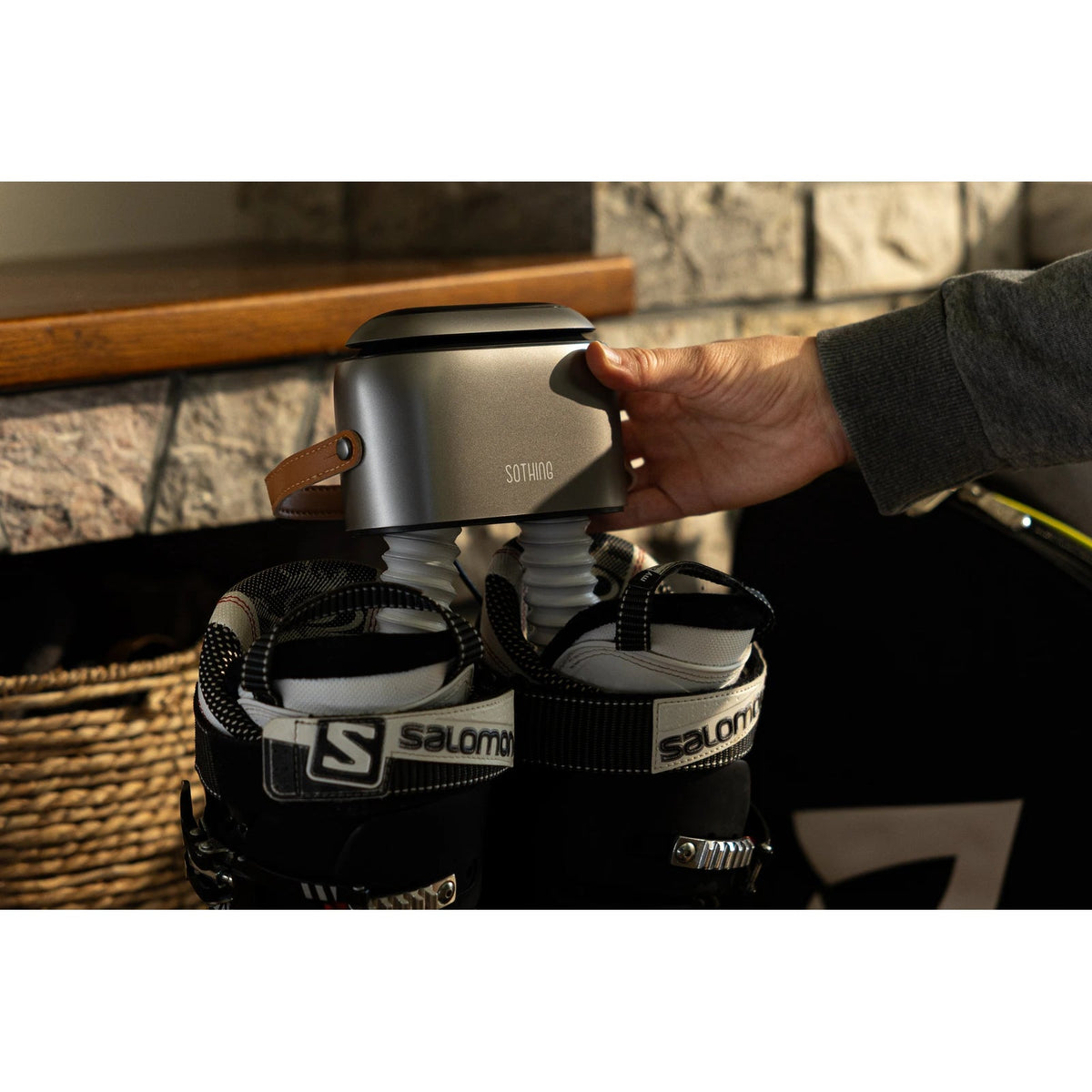
After a muddy walk, the dirt is the obvious job. The moisture inside the boots is easier to miss. Treat them as two related tasks rather than trying to dry the whole problem away.
Start by identifying the footwear and its care instructions. A waterproof hiking boot may combine leather, textiles, a membrane and a removable footbed. The care route needs to suit the complete boot.
Remove dirt by the approved method
Use the boot maker's instructions for loose dirt, cleaning tools and any cleaning product. Do not improvise a solvent or assume a washing machine is acceptable. Open the boot and remove parts only where its construction and instructions permit.
GORE-TEX's footwear guidance separates cleaning, drying and reapplying water-repellent treatment. That is a useful distinction: a dryer does not clean mud from the boot or replace the aftercare a particular material needs.
Waterproof is not permission to add heat
The membrane label does not authorise every drying method. GORE-TEX advises avoiding direct heat; check the footwear manufacturer's instructions as well. If those instructions specify air drying, follow them rather than assuming a low appliance setting is close enough.
Keep jacket-care advice separate from boot-care advice. A treatment procedure for a waterproof garment is not automatically a procedure for footwear made with a membrane carrying the same brand name.

Follow the order the maker gives you
After cleaning, remove excess surface moisture as directed and choose the approved drying location or method. Do not use the appearance of the outer fabric as the only readiness check. Look at the lining and any removable parts before reassembling the pair.
If conditioning or a water-repellent treatment is needed, use a product appropriate to the exact material and apply it at the stage specified by the boot maker. More product is not necessarily the right answer, and a treatment suitable for one leather finish may not suit another.
Before the next walk
Check the sole, fastening and inside of the boot for anything that needs attention. If water entry or damage has become a repeated issue, ask the manufacturer or retailer about the underlying problem. A drying routine cannot repair a failing component or establish that a boot remains fit for its intended use.
Let storage be the last step, not the place where drying is supposed to happen. Keep care information with the pair so the next wet walk does not restart the guessing.
For a general check before using heat, read the material-compatibility article. The shoe-care guide brings the Store's model and care links together.
読み続ける

Choose a shoe dryer by the routine it needs to fit
Five practical questions before buying: footwear permission, outlet reach, controls, storage and the correct regional edition.

A timer ends a session. It does not tell you the shoe is dry.
Why a single drying-time promise is not useful, and how to plan a session around moisture, construction, permitted settings and checking progress.
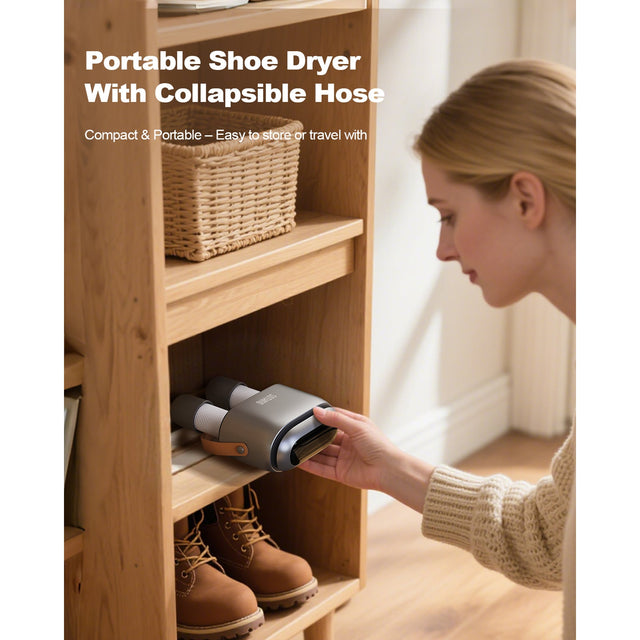
Make room for the dryer—not just for the boots
How to plan an entryway drying spot around the manual: surface, airflow, water, cords and a clear place for removable parts.